Certifications and approvals for lithium batteries: UN38.3, IEC 62133, IEC 62619

Lithium battery certifications ensure the safety, regulatory compliance, and reliability of energy systems used in professional and industrial applications. They guarantee that batteries meet strict standards for transport, durability, electrical safety, and performance.

Certifications such as UN 38.3, IEC 62619, CE marking, or R10 and R100 approvals validate batteries under demanding conditions including vibration, shock, overcharge, temperature stress, and electromagnetic compatibility.

Beyond regulatory requirements, certifications are also a mark of quality and trust for manufacturers, integrators, and end users. They facilitate the integration of batteries into industrial, mobility, or energy storage projects while ensuring a high level of safety and durability.

At TYVA Energie, lithium battery solutions are developed according to high-quality standards to meet the requirements of the most demanding professional, industrial, and mobile applications.

Our various certifications

ECE 38.3
Production Qualité

UN 38.3 certification

International transport

This is the most well-known standard and ensures the safe transport of your lithium batteries by road, air, or sea. This standard becomes essential for production batches of 100 units or more. Without this certification, it is very difficult to ship lithium batteries by air for export.
Marquage CE
Production Qualité

CE marking

Europe

This certification ensures that our lithium batteries comply with the requirements set by European Union regulations.
RoHS Compliant
Production Qualité

RoHS certification

Europe

RoHS certification ensures that our lithium batteries do not contain any hazardous substances.

IP 65
IP 67
Production Qualité

IP rating (Ingress Protection index)

Waterproofing / Sealing

The IP protection ratings define the level of resistance of a device against solid objects and water. The international standard International Electrotechnical Commission ensures a reliable and universal classification.

  • IP54: Moduloo Ax
    limited dust protection, water splashes
  • IP65: Moduloo Bx, Flat & Kube
    dust-tight, water jets
  • IP67: Moduloo Bx and custom Flat & Kube
    temporary immersion, dust-tight


IEC 62133
Production Qualité

IEC 62133-2 certification

Europe

This standard applies to portable and removable lithium batteries within a system. It is designed to protect users from risks related to design defects in batteries.

IEC 62133-2 certification

TYVA Energie supports you in certifying your custom batteries.
IEC 62619
Production Qualité

IEC 62619 certification

Industrial, Energy storage

This standard applies to lithium batteries used in systems for electric vehicles or for residential and industrial energy storage systems. It is designed to protect users.

IEC 62619 certification

TYVA Energie supports you in certifying your custom batteries.
IEC 62660
Production Qualité

IEC 62660 certification

Electric vehicles

This standard defines the safety, performance, endurance, vibration, and thermal behavior tests for lithium-ion cells used in electric vehicles, ensuring their reliability and automotive safety.

IEC 62660 certification

TYVA Energie supports you in certifying your custom batteries.
ECE R100
Production Qualité

UNECE R100 Rev.3 certification

Electric vehicles

The ECE R100 certification is a UNECE standard that defines safety requirements for electric vehicle batteries, including resistance to shock, fire, and extreme conditions.

UNECE R100 Rev.3 certification

TYVA Energie supports you in certifying your custom batteries.
ECE R10
Production Qualité

UNECE R10 Rev.6 certification

Electric vehicles

This standard concerns electromagnetic compatibility (EMC). It ensures that a vehicle’s electronic equipment does not cause or suffer from electromagnetic interference.

UNECE R10 Rev.6 certification

TYVA Energie supports you in certifying your custom batteries.
Production Qualité

TYVA Energie is ISO 9001 certified

With this certification, we guarantee our customers:
 
  • Controlled manufacturing processes: Ensuring that each lithium battery is assembled according to strict, repeatable, and monitored criteria.
  • Traceability and safety: Rigorous management of components and the supply chain, essential for sensitive technologies such as lithium.
  • Continuous improvement: The company’s commitment to constantly optimizing its production methods and R&D to meet the demanding requirements of applications in industrial, defense, aerospace, and mobility sectors.


ISO 9001

Support services for certification

How do you certify a lithium battery?

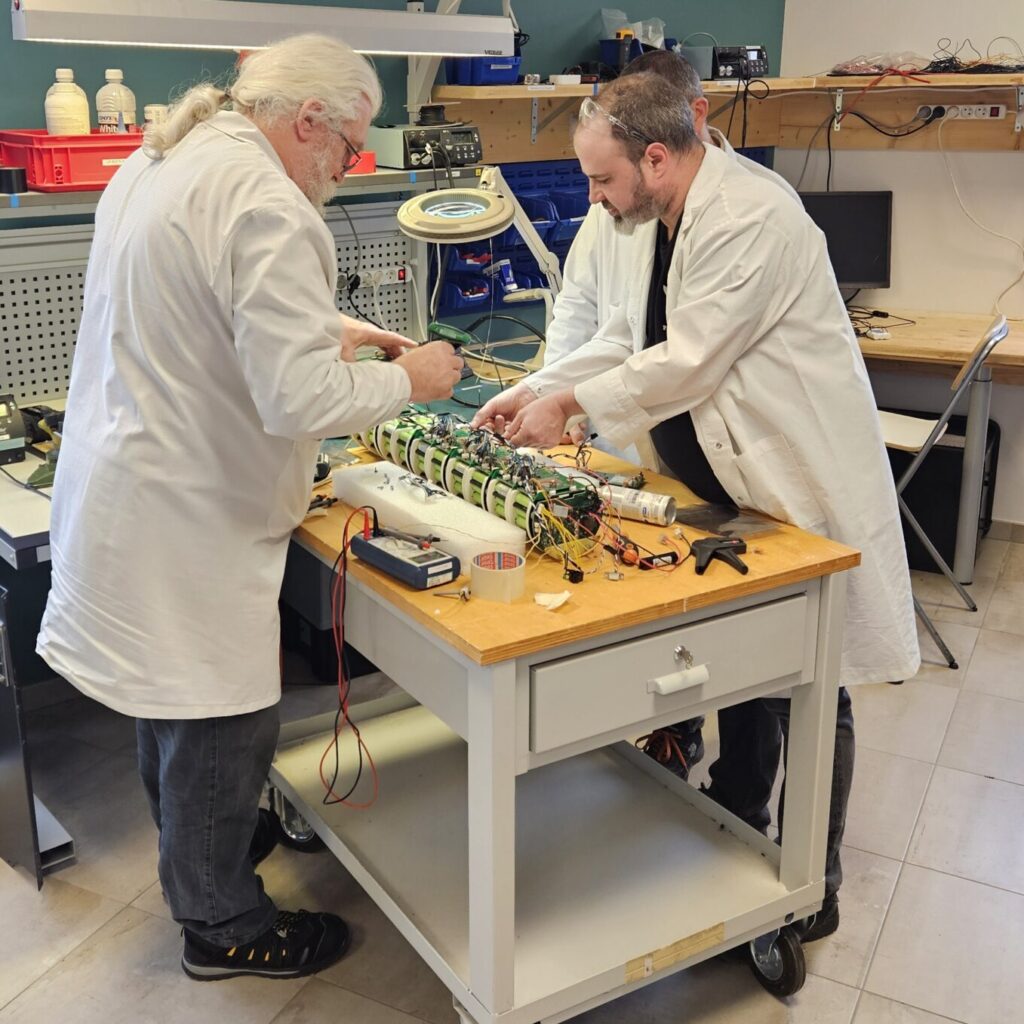
Certification support is one of the key pillars of TYVA Énergie’s offering, as we know these steps are often a bottleneck for companies producing small and medium production runs.

Here is how we make it easier to obtain these essential approvals

  1. Pre-certified product ranges (Time-to-Market advantage) This is our biggest advantage: the core building blocks of our ranges (Moduloo Ax & Bx, Moduloo 3D, Flat & Kube) are already UN 38.3 certified.
    • Time savings: By using pre-certified modules, the certification process for your complete battery pack is significantly simplified and accelerated.
    • Cost reduction: You avoid starting from scratch for shock, vibration, and short-circuit tests, as the internal architecture has already proven its robustness.
  2. Strategic consulting and test optimization TYVA Énergie does not only manufacture; we also advise you to optimize certification budgets:
    • UN 38.3 / IEC 62133 synergy: we often recommend running both certifications simultaneously in an approved laboratory to pool costs and reduce overall expenses.
    • Normative expertise: Through our TYVA Battery Academy program, we train clients on the differences between standards (e.g., IEC 62133 for portable battery safety vs. IEC 62619 for industrial applications).
  3. End-to-end support with laboratories For production runs of 100 to 1,000 units, certification becomes mandatory for transport (especially air freight). TYVA supports you with:
    • Technical file preparation: compiling all required documentation for testing laboratories.
    • Test coordination: liaising with partner laboratories to ensure that prototypes submitted for testing meet requirements.
    • Transport packaging: providing guidance (and sometimes certified packaging) to comply with dangerous goods transport and packaging regulations once UN 38.3 certification is obtained.
Homologation batterie lithium

Why is this critical for a production volume (100–1,000 units)?

From 100 units onwards, you are no longer in a “prototype” regime (which benefits from certain transport tolerances). You become a series manufacturer placing products on the market. Without a partner like TYVA who masters these processes, certification costs could make your project unprofitable.

The IEC 62133 standard mainly applies to lithium batteries used in portable electronic devices such as laptops, mobile equipment, or portable medical devices. It ensures battery safety in consumer and mobile applications.

The IEC 62619 standard applies to lithium batteries intended for industrial and high-power applications: energy storage, robotics, industrial vehicles, onboard equipment, or energy systems.

In summary:

  • IEC 62133 → portable lithium batteries
  • IEC 62619 → industrial and critical application lithium batteries


The IEC 62619 standard generally imposes stricter safety requirements in terms of thermal management, power handling, and system safety.

UN 38.3 certification is required as soon as a lithium battery or any equipment containing a lithium battery is transported by air, sea, road, or rail.

This international regulation ensures the safe transport of lithium batteries by validating their resistance to a series of tests: altitude, vibration, shock, short circuit, overcharge, and thermal variation.

The UN38.3 standard applies to:

  • lithium-ion batteries,
  • lithium metal batteries,
  • standalone batteries,
  • batteries integrated into a device,
  • batteries shipped with equipment.


Without valid UN38.3 certification, the commercial transport of lithium batteries is generally prohibited by carriers and international regulations.

The certification of a custom lithium battery consists of validating its compliance with the safety, transport, and integration standards applicable to its final use.

The process generally includes:

  • analysis of technical and regulatory constraints,
  • selection of cells and the BMS system,
  • electrical and thermal testing,
  • safety tests,
  • transport tests,
  • preparation of the compliance documentation file.


Depending on the application, several certifications may be required, including:

  • UN 38.3 for transport,
  • IEC 62133 for portable equipment,
  • IEC 62619 for industrial applications,
  • CE marking,
  • or sector-specific approvals depending on the industry.


TYVA Energie supports its clients throughout the certification process: defining regulatory requirements, battery design, test preparation, coordination with partner laboratories, and validation of technical documentation. This support helps secure project development, optimize time-to-market, and ensure regulatory compliance of custom lithium batteries.

Get in touch

You have a project? Need more information? Want to learn more about our sustainable and modular lithium battery solutions?